
ANOKYE LEADER’S GOAL OF INFLUENCE MODEL
By Dr. Kofi Anokye Owusu Darko
ACIB , LLB, LLM , EMBA, ChPA, CMC, DipFM, CIPM, RODP, PEM.ADR
INTRODUCTION
- In any organised setup with human beings be it family, political or corporate there exists different kinds of people which we read as personality types or behaviours.
- By the various inherent personality types we have as human beings, there are people in an organisation that need to be influenced and empowered to be able to execute a desired future state.
The Goal of Influence
- Beliefs
- Expectations:Individuals in an organization have their own Beliefs, Expectations, Assumptions, Concerns and Hopes
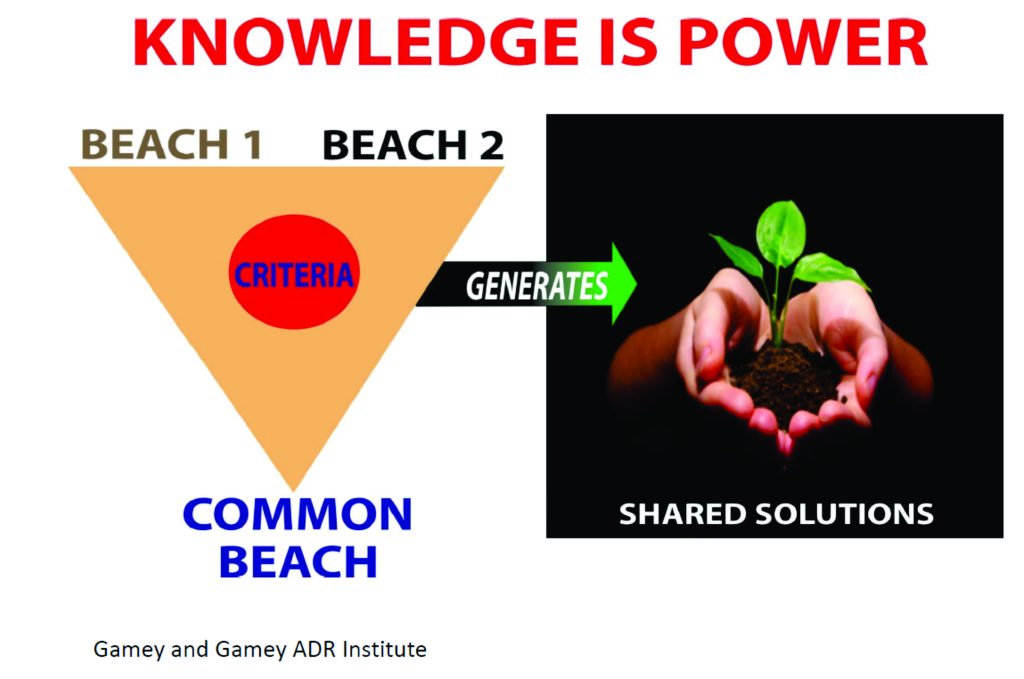
- Assumptions: The dilemma of leadership is the ability to influence all this mix of personalities to achieve the common (BEACH)
- Concerns
- Expectations
- Hopes
About the model - Five Modes of the leader’s goal of influence in leadership
The model describes the journey of influence that one has to travel in leadership, and the target is to move everyone from the outer red zone into the center green zone, the bullseye, and keep them there
It is not a permanent circle for anyone, and people can move forward or slide backward depending on the degree and type of influence, the personality types, as well as the culture in the organization The movement is also not necessarily by stages since one can move from the red zone straight to the green zone and vice versa It is a continuum, a mode of influence
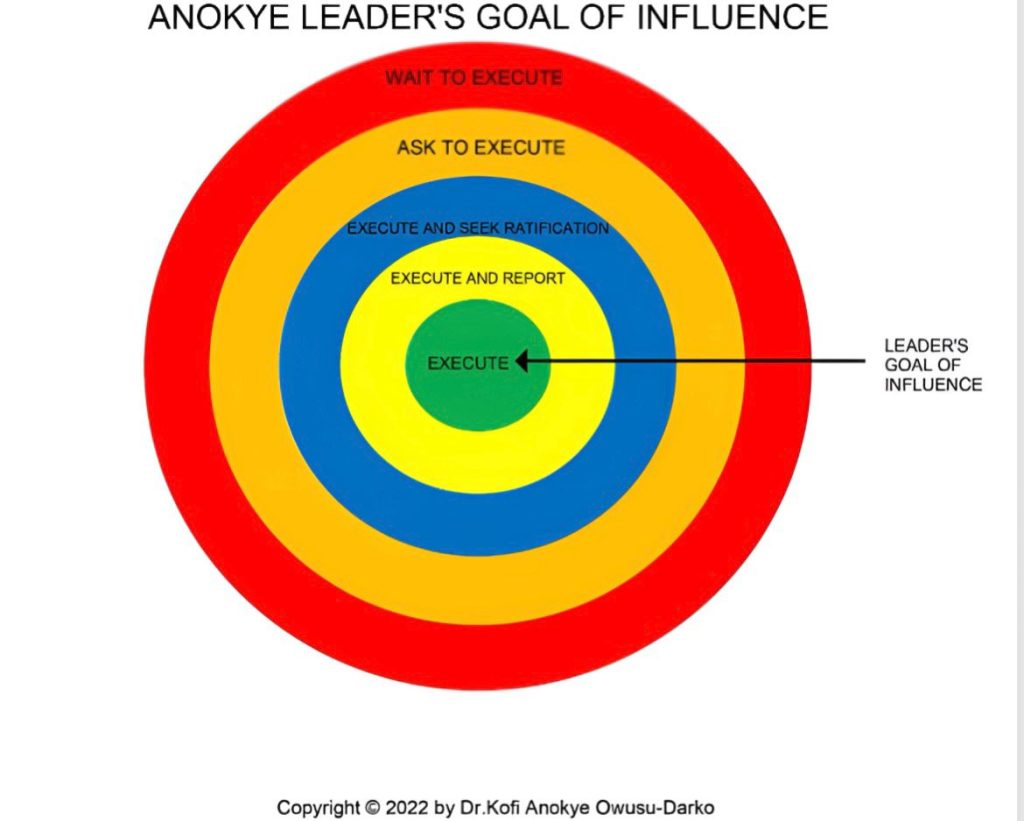
WAIT TO EXECUTE (RED)
- These are people who just wait to be told what to do. They have no motivation to get things done Their behaviour makes one feel like they are doing the organization a favour or were begged or forced to take up the role or task They also tend to behave as if the job is not really what they were looking for or
want, but they are making do with it
- Interestingly, one could be wrong in making these assumptions about those in this circle because it could be that they have no idea or knowledge about the task they are expected to undertake, or it could be due to their personality type, or they are just new on the job
- They may be willing but unable to perform the task or role assigned to them This may be annoying, but a little bit of training and development may move them closer to the inner circle
ASK TO EXECUTE (ORANGE)
- At this point, people might have the know how and knowledge but lack the confidence to take the needed initiative to get the job done The reason could be numerous and could include a power or role culture in the organization, the leadership style, and,
of course, the personalities of the parties
- These people want to be sure they have been given the approval to proceed by a superior before they execute any task They lack self motivation, are not sure of their capabilities, and want to seek direction It may come across as if they are dumb, and you end up doing their work for them yet paying them They are still very vulnerable and have the tendency to slide back to the “wait to execute” mode if not appropriately influenced
- They may be willing and able to perform the task or role assigned to them but lack the motivation to A little bit of encouragement, empowerment, and appreciative inquiry techniques may move them closer to the inner circle
EXECUTE AND SEEK RATIFICATION (BLUE)
- Where people have the requisite knowledge, training and skills to execute the task but are unsure of the organisation’s position or mind set of the supervisor they will seek approval for what they have done
- Some may just want to avoid blame should something go wrong or seek collective responsibility It may also be that past events of “execution without approval” have caused unpleasant issues There are those who also do not trust the system to take any risk, even in a crisis situation
- They are willing and able to perform the task or role assigned to them, have the motivation but either not sure of approval of their actions or not ready to take responsibilities for their actions People like this need encouragement and assurance to move towards the inner circle
EXECUTE AND REPORT (YELLOW)
- Those who “execute and report” have an abundance of knowledge and experience and are self motivated They know what to do in any given situation and have good relationships with their colleagues
- They know the mindset of the leader and what he or she is likely to do or not do in any given circumstance, so they can play that role They know they will get acknowledgment of their actions, and to a very large extent, mistakes will be tolerated as part of learning
- They are willing and able to perform the task or role assigned to them, have the motivation sure of approval of their actions, ready to take responsibilities for their actions but want to make sure someone else knows about their actions just in case something goes wrong with their decision so they can cover themselves with a joint responsibility People like this need the spirit of intrapreneurship to own their actions to be able to move towards the inner circle
EXECUTE (GREEN)
- This is the ‘bull’s eye’, the ultimate goal of leadership At this point, everyone is firing all cylinders and knows what to do, how to do it, when to do it and the expectations of all parties.
- They have seen it all, have a systems view of the workings of the organization, understand the interactions between different parts of the organization, know the psychology of the organization, the leadership styles of everyone, and how to get the best out of the diversity in the workforce
They know the culture and how to navigate it to achieve their goal. They appreciate that most times, “ the end must be as good as the means” w hen building an achievement or support culture, but are mindful that situations arise in times of crisis management when “ the end should justify the means.
In this circle, the mode of “Execute,” the leader has created a learning organization of executives, intrapreneurs , and internal consultants who are disciplined in thought and action, eliminating the need for bureaucracy and excessive control.
CONCLUSION
There is no one best way to navigate the various modes in the Anokye Leader’s Goal of Influence” model Everyone has what it takes to get them to act, and that is the leader’s quandary. Your goal as a leader is to influence people to execute to the point of you not having anything to do but dream of the future